

As the title suggests, I am currently revising the chapters to transform this into a book. Stay tuned!

My Dearest Uncle Screwtape,
I write with pleasing tidings from our little petri dish on the banks of the Yangtze.
As you will recall, years ago we nudged a handful of vain men in white coats toward that charming euphemism: gain of function. They wrapped it in funding proposals, patted themselves on the back for “pandemic preparedness,” and—most deliciously—persuaded Western governments to pay for it. Years from now, we will chortle aloud, knowing that their own gold purchased the instrument of their undoing.
You will be glad to know that the seeds we planted in that dreary laboratory have finally taken root. A cluster of “mysterious pneumonia” has appeared in a provincial city called Wuhan. The local Party is doing its usual work—suppressing, censoring, threatening—but the pathogen has already slipped the leash. There are flights leaving that airport every day for Europe and America. With a little demonic tailwind, it will be everywhere before they can even agree on what to call it.
This, dear Uncle, feels like our moment.
For decades, I have been studying their response to the so-called “Spanish Flu” a century ago. What a prototype that was! Gathering ordinances, shuttered churches, “mask police” patrolling the streets, fines for bare faces—all with little effect on the course of the disease, but magnificent effects on suspicion and petty tyranny.
Fortunately, that era has sunk into the haze of myth. Those who lived through it are nearly all gone now, and the few tottering relics who remember how the closures failed can be easily dismissed as confused or crankish. Their heirs inherit the ghost of the terror without the memory of the folly. If, in 1918, they could shut down cities with nothing but newspapers and posters, imagine what we can do now with 24-hour news, push alerts, and a glowing rectangle in every trembling hand!

I have also been reviewing our earlier successes in Milan during the 1600s. You remember Manzoni’s account, of course—the rumors of “unclean” people spreading the plague, the mobs that attacked old men for simply dusting benches, the health officers who plundered under the cover of “good governance.” It appears humans have a particular talent for turning epidemics into witch hunts and granting extraordinary powers to self-appointed saviors.
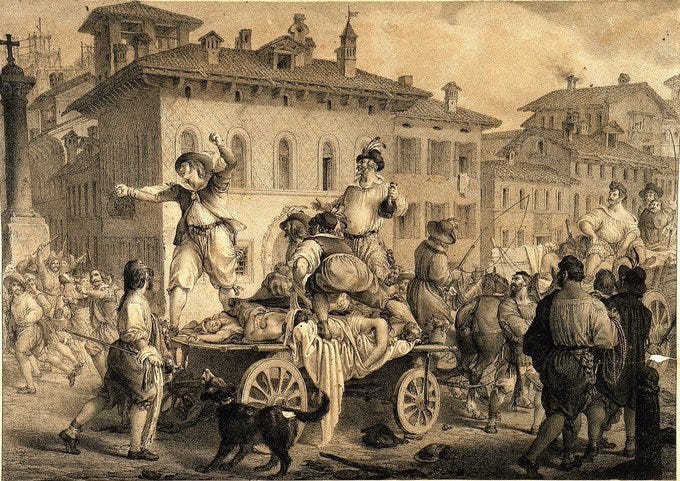
The historical record reads like a training manual, annotated in the margins by fools who vowed never to repeat any of it—and then promptly did.
This new virus looks promising: alarming enough to justify drastic measures, yet not so apocalyptic that it burns out too quickly. It spares the young more often than not but preys upon the old—the very generation whose frail existence we can exploit as a moral hostage.
What was that charming slogan your minions smuggled into their preparedness guides? Ah yes—“Stay home or you’ll kill Grandma.” A perfect spell: simple enough for the masses, yet potent enough to make them police their own families.
What I seek from you now is guidance on the opening gambit. How much should we emphasize the mystery of the origin? Shall I steer them immediately toward a convenient animal market myth (the pangolin, the bat, the raccoon dog... truly, spin the wheel of fauna!), or let that unfold gradually? And most importantly: how do we ensure that when this ember lands in New York, London, and Rome, it turns not into a brief, localized blaze, but into a worldwide moral crusade?
The virus will do what viruses do. Our business is to make the image of this danger torture their minds more than the thing itself.
Awaiting your counsel with eager malice,
Dr. F.
Letter II – Screwtape’s reply to Dr. F.
My Dear Dr. F.,
First, I must confess a good deal of laughter remains ringing in the halls here from the fact that your peers have christened the monstrous disease chambering as “gain of function” — suggesting some part of them sensed what was afoot — and they did it anyway. Now to the task at hand!
Gambit? My dear nephew, this is no mere gambit… this is a Great Reset.
A gambit implies a mere game of chess, a tactical sacrifice to gain a positional advantage. You are thinking too provincially! We are not here simply to win a match; we are here to overturn the board entirely. You must stop thinking in terms of an outbreak and start thinking in terms of a new epoch—one where the old liberties are not merely suspended, but deleted and rewritten.
You ask how best to proceed with this “reset.” Let us, as you have wisely begun to do, consult our case studies.
First, your beloved 1918. You are quite right: that influenza season was a rehearsal, not a finale. Cities ordered masks on pain of fines; officious busybodies patrolled parks; churches were barred. Still, the virus came and went on its own terms. The masks grew filthy and soggy. The “mask police” became a local joke. But here is the key, dear nephew: as you noted, the survivors did what humans always do—they forgot the substance and remembered only the myth.
That blindness to history is as predictable as the sunrise. It guarantees that long after the danger has passed, there will remain those delicious holdouts—families who will take a temporary measure and make it a lifestyle, cloistering themselves away from the world to raise a family that views the open air itself as an enemy.
That, my dear nephew, is the true prize—a terror etched so deeply it becomes a cherished family heirloom, generational trauma swaddled in sanctimonious virtue-signaling, and plated alongside the exquisite dismantling of their civilization.
Today, our present herd carries an unexamined impression that “in the old days, they did the right thing and saved lives.” They recall the posture of sacrifice, not the outcome. This generational amnesia is your greatest asset. The heirs are ripe for a reenactment—this time with us scripting every act.

Then there is 17th-century Milan—the jewel in our crown. You have been reading Manzoni; excellent. He noticed what we labored to accomplish there: the image of danger tortured the minds of the people more than the actual danger ever could.
Do you recall how we turned that city upside down? Once a rumor of “uncleaners” (the untori) began, the city turned upon itself. Ordinary folk, convinced that invisible agents were anointing doors with plague, attacked one another. They arrested strangers for their clothes. They dragged innocents to torture. The authorities, delighted, appointed bands of Monatti—those charmingly unelected health enforcers—who entered houses like conquerors, plundered at will, and laid infected hands on healthy bodies under threat of quarantine.
The genius of Milan was not the fatality rate, but that we made fear itself the governing principle.
Now, consider what you have on the table: a manageable pathogen, a global travel network, and a public that reveres “experts.” Our aim is not merely to repeat 1918 or Milan, but to globalize them—almost instantly!
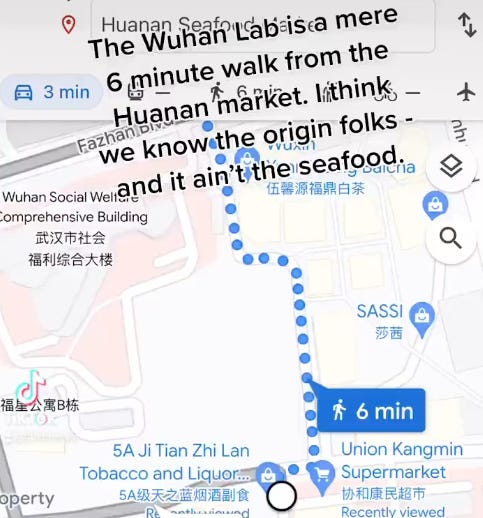
Indeed, you must obscure the origin. Do not let them dwell on laboratories and funding; that way lies accountability. Offer them, instead, the story we crafted as familiar and convenient: exotic animals, unsanitary markets, and the comforting thought that this is all a misfortune of nature. Encourage a few pet scientists to declare any lab hypothesis a “conspiracy theory.” Their signatures will later be trophies on our wall.
The language difference should lend cover to the wet market being a stone’s throw from the laboratory.
Next, summon the Milanese spirits. Recreate the psychological conditions of those glorious plague years. Encourage rumors of unseen contamination—asymptomatic phantoms lurking on every doorknob and breath. Give them talismanic phrases such as “superspreader” to mutter against their neighbors. And where Milan had its Monatti, you will have health inspectors, modelers, and “fact-checkers,” all conveniently exempt from scrutiny, wielding decrees and fines as their instruments of piety.
Once their minds are properly softened, you may lead them through the entire litany of enlightened error:
the origin misidentified,
the transmission misunderstood,
asymptomatic spread exaggerated,
PCR tests misapplied,
the fatality rate inflated,
lockdowns canonized,
community triggers invented,
businesses sacrificed,
schools shuttered,
the healthy quarantined,
the young burdened,
hospitals theatrically declared overwhelmed,
plexiglass exalted,
social distancing ritualized,
outdoor spread imagined,
masks mythologized,
variants dramatized,
natural immunity suppressed,
vaccines oversold,
and their injuries politely ignored.
Each mistake, my boy, will not weaken their faith in the new orthodoxy—it will strengthen it. For nothing binds a congregation more tightly than a creed built entirely on errors they are too embarrassed ever to renounce.
You must also seize the language. Before you slam doors, you must redefine words. Define a “case” not as a sick person, but as any positive test. Redefine “safety” as “compliance.” Once the language is ours, the policies will follow naturally; people will beg for lockdowns as rites of penance, just as they begged the Monatti to take away their neighbors.
Finally, stage the measures as temporary. Remember, human minds accept nearly anything if told it is “just for two weeks.” Announce brief closures, then extend them. Treat every extension as a moral test, every doubt as selfishness. In 1918, they lacked the tools to drag this out; you have modeling software, dashboards, and television.
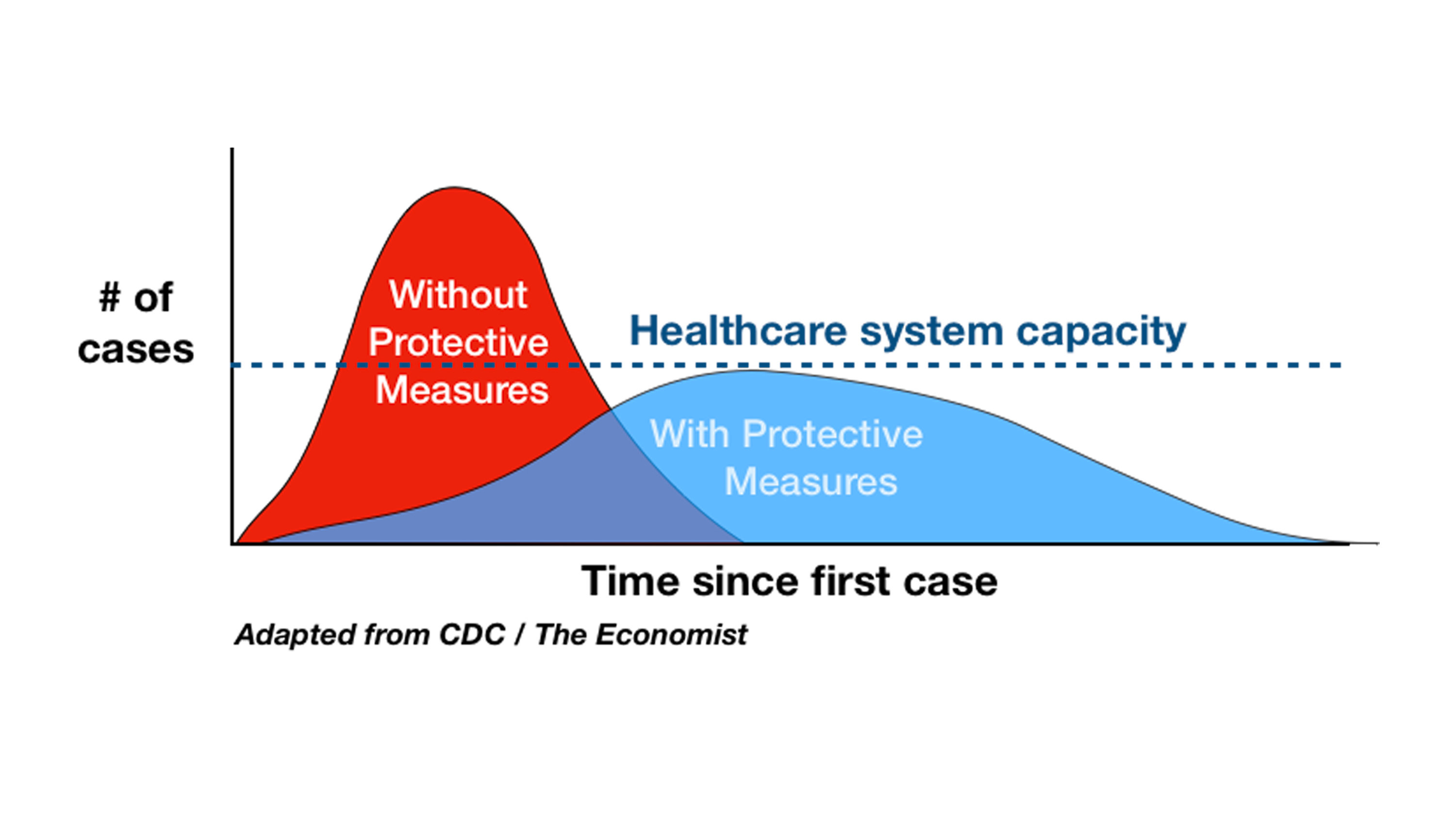
So unleash your little creation confidently. Let it travel to Milan and Madrid, London and Los Angeles. Once the first shots of overflowing hospitals (real or staged) appear, the rest will unfold as predictably as a liturgy.
We shall, of course, refine tactics as events unfold: masks, plexiglass shrines, the quarantining of the healthy, an entire “New Normal” of separation. But you may take comfort in this: we have done it before, in smaller arenas, and the human animal has not grown wiser. Only more connected, and therefore more easily driven as a herd.
Proceed, dear nephew. This is no mere outbreak; it is the opening of a grand opera. And you, with your gain-of-function choir, hold the first note.
Your affectionate uncle,
Screwtape
These letters are excellent! Well done. They remind me of Mark Twain.
The mini-future of earlier episodes had more of human interaction and held attention. The later letters missed that interaction. The later letters do suggest hidden hands behind that future. For the book there is a need for an ending or perhaps two endings. One ending suggests more of a declining disappearing society and the other a journey of a new reborn society comes to its senses. Gotta have hope.