

Part 1 (origins), Part 2 (masks), Part 3 (lockdowns), Part 4 (the new normal), Part 5 (plexiglass), Part 6 (quarantines), Part 7 (social distancing), Part 8 (swabs), Part 9 (essential workers)
My lubriciously loyal Nephew,
How exquisite it is to watch our favorite paradox ripen: commandments for the herd, dispensations for the Elect. The pageant of hypocrisy you’ve curated—oh, it is a sacrament in itself, a new rite of Indulgences for the Biosecurity Age. You have taken what our ancestors learned in Milan—when processions against pestilence became the pestilence—and refined it into a governance principle: forbid publicly, feast privately, then scold the flock for noticing. Delicious.
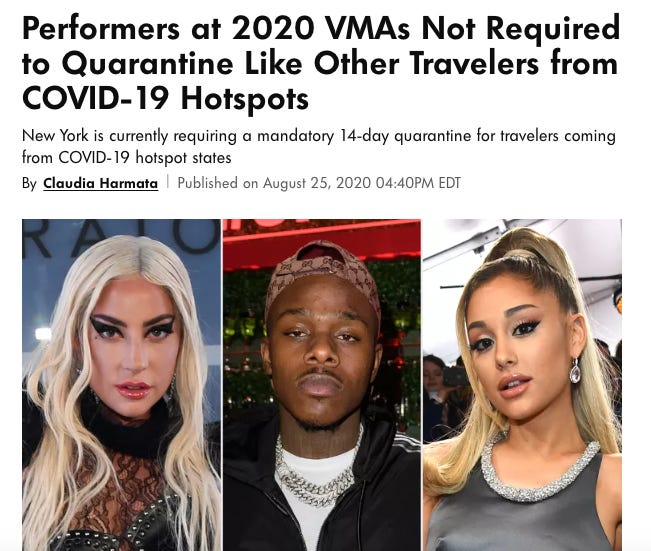
Consider, as I do with purring satisfaction, the “holy exemptions”: the celebrity pilgrimage to the MTV awards while the rabble counted quarantine days like penitents with rosary beads.
The coiffure catechism in San Francisco, in which a Speaker’s hair was laid tenderly upon the altar while ordinary tradesmen were declared contagion. The city-employee gymnasia piously throbbing with privilege while private floors fell silent. How splendid that you called these “nuanced risk calculations.” In the old days we needed incense to conceal the odor; now a press release will do.
Then there are the processional moments—our liturgy of the tarmac and the linen napkin. A senator gliding sans mask through the private terminal; a governor’s eucharistic supper at an exalted Napa table; a mayor’s jubilant street rally counted as civic devotions, not violations.


Each tableau proclaims our doctrine: optics over outcomes. Let the herd see the sash and the seal; let them not see the science. As we noted in earlier letters after our triumphs with outdoor masking and six holy feet of separation, rules work best when both arbitrary and absolute. (Arbitrary, to keep them guessing; absolute, to keep them kneeling.)
But attend, dear boy, to the useful tension your parade creates. Hypocrisy breeds a sour pride in the herd—they start muttering of “double standards,” as though they had discovered a theorem. This sourness, if neglected, may harden into resistance. So we must treat hypocrisy not as scandal but as fertilizer. When the public’s rage ferments, we pour it into the cask of collective guilt: “Yes, mistakes were made—by all of us, especially by you reckless diners.” The Elect then confess in velvet: “We miscommunicated; the science evolved; we were feeling the spirit.” The flock, reassured that failure is universal, returns meekly to the pen. Our dear London priestess said it best in her club: she felt the spirit—how gloriously charismatic our secular saints have become.
Remember also the small, intimate dispensations, for they sting the plebs most delicately. A superintendent who forbids in-person learning while placing his own lamb in a classroom; the surgeon tasked with edicts, sampling forbidden air in a “closed” park; a city attorney instructing sacrifice, then unmasking for cake and candles. These are not errors; they are rehearsals in feudal optics. The message lands: there exists a class whose risk is noble and necessary, and yours is merely selfish. Thus is infantilization renewed: “Hush now; Father knows best; Mother needs her table for State matters.”

Beware, however, clusters. When the French Laundry mingles with Cabo broadcasts, private jets and presidential birthday revels, when mayors tweet “Avoid travel” from the jet bridge and “Stay home” from the beach, the herd’s nose twitches. They recognize a scent not of sanctity but of selection. This is where your craft must deepen. You will not eliminate the scent; you will perfume it. Rotate the vocabulary—“pilot program,” “brief lapse,” “outdoor-adjacent,” “mental health exception”—until their indignation is exhausted by our synonyms.
And when a face becomes too indelicate a mask for our arrangement, do what the Milanese magistrates did with the imaginary “anointers”: offer a culprit. Retire one governor in disgrace to refresh the font; elevate a rival who promises “the same measures, but smoother.” The people long not for liberty but for less friction. Let us give them a more aerodynamic gaoler.
Press toward the future: the next crisis may not afford the culinary symbolism of French Laundry, but it will teem with exemptions. Energy austerity will require gala lights to stay on—for morale. Speech quarantines will need off-record salons—for “dialogue.” Travel rationing will make room for “delegations.” Codify privilege openly next time (see those jolly British clauses for “significant financial benefit”): nothing deadens resentment like official stationery.
Do not let them wake from this stupor, dear nephew. Keep the rules moving, the apologies lyrical, the punishments exemplary (for the small), and the exceptions sacred (for the great). Hypocrisy is our censer; swing it until their eyes water.
Your affectionate Uncle,
Screwtape
Most Magnificent Uncle,
Your benediction inflames me. I see now that our hypocrisy must be orchestrated, not concealed—an aria, not a cough. Permit me to report on the Stations of Our New Rite, and beg a few refinements.
Station I: The Dispensations of the Elect. We began with the MTV exemptions—a glittering precedent that taught the masses the difference between their quarantine and a quarantine of cultural importance. We then brushed the Speaker’s tresses and swung open the city-employee gym doors—an early exercise in “essentiality inflation.” If the herd can be taught that grooming a leader’s image is essential, then surely anything that maintains the custodian class is equally sacred. (I am preparing a white paper: Hygiene of the Hand that Rules.)

Station II: The Processional Feasts. The French Laundry reverie—ah, Uncle, what music!—paired with that mayoral street fête billed as a “democracy rally,” gave us the aesthetic we needed: politics as liturgy. When the flock asks, “Why may they feast while we fast?” we whisper, “They fasted in meetings; they feasted for you.” If contradiction stings, we add your talisman: “outdoor-adjacent.” Photos of sliding doors? We speak of “dynamic airflow.” Applause follows, because applause wants a reason.

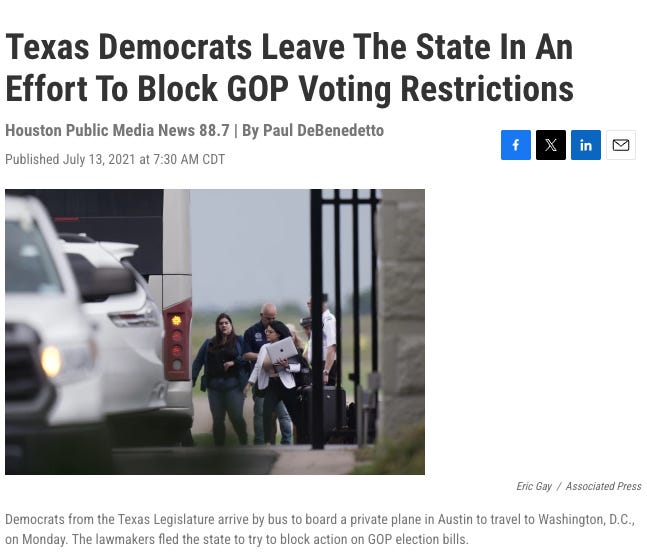
Station III: The Tarmac and the Jet Bridge. Our private-terminal pilgrim, our Denver traveler tweeting abstinence, our Texas legislators soaring maskless to obstruct a vote—each teaches that the sky is a sanctuary. Travel is forbidden unless it is obviously important—which is to say, unless it is ours. Add the UK’s lovely rubric allowing “senior executives” to break quarantine for financial sacraments, and the catechism is complete: Profit and Power are immune-compromised; handle with care.

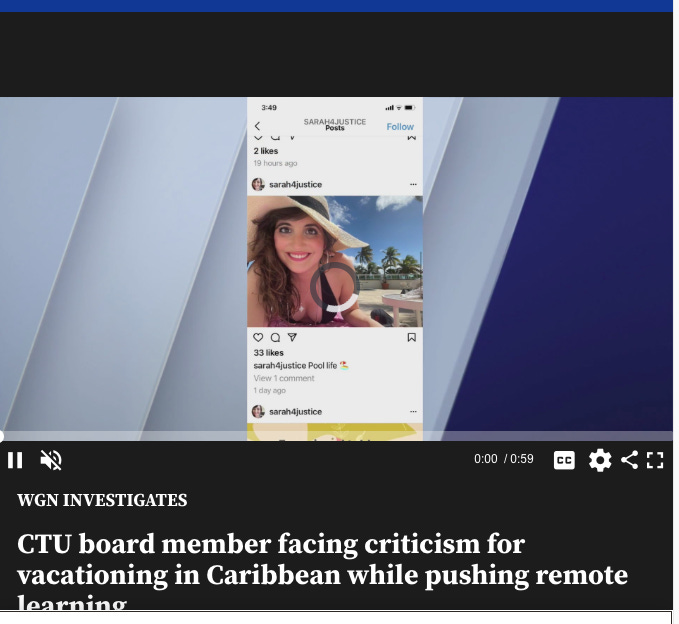
Station IV: The Domestic Exceptions. The superintendent’s daughter slipping into a classroom, Dr. Birx gathering three generations at the Thanksgiving she discouraged, the city attorney’s birthday gala, the teacher-union magnate sunning on the beach—these are the delicate cuts that bleed compliance into cynicism. Yet I take your point: we must not let the cuts become a hemorrhage. I propose we salt them with collective-responsibility fog: “While some of us stumbled (for which we apologize!), the greatest danger remains your neighbor’s selfishness.” As you taught in our earlier triumphs—those plexiglass chapels and six-foot chalk circles—accuse the sinner inside every saint, and every saint will police himself.

Station V: The Public Penance. I am drafting repentance scripts in the key of contrition-major: “We regret the confusion,” “We wouldn’t repeat that now that the science has matured,” and my favorite, cribbed from our San Franciscan priestess of nightlife, “I was feeling the spirit.” (Note how it elevates the transgression to inspiration.) To cool the rage, we then present a modest sacrifice—demote an appointee, retire a spokesman, or rename a policy. The machine remains; the gears are oiled with a single, visible gear tossed aside.
You warn of clusters; I shall scatter them. In the next chapter of our enterprise, each hypocrisy will be braided through a different theme so the herd cannot hold them in a single, damning fist. The French Laundry will appear in a passage on Optics over Outcomes; Cabo will cameo in Infantilization of the Public (“Daddy was working remotely”); the private-terminal glide will glow in Normalization of Control Measures (“Leaders must remain mobile to protect the immobile”). The Obama birthday idyll can adorn Virtue as Pageant, and the UK executive clause will anchor Rules for Thee, Roles for Me. If the herd ever begins to connect the dots, we rotate the chart: “Context differs,” “Risk is layered,” “Equity requires flexibility”—each phrase a solvent that dissolves patterns back into anecdotes.
As to the danger that discontent may eject our current shepherds, your counsel to swap faces but not hands is brilliant. We shall promote the Softer Gaoler: the one who speaks of “healing,” “community,” and “trauma-informed policy” while returning the locks to their familiar lintels. “We learned,” she will say, even as she keeps the key ring. Useful idiots—our dear Usefuls!—will touch their caps and thank us for listening.
Permit me, finally, a promise for the age to come. During the next declared emergency—whether climatic, algorithmic, or linguistic—we shall publish the exemptions first. Make them beautiful: embossed paper, tasteful seals, “wellness accommodations,” “diplomatic corridors,” “delegational corridors” and, my favorite, “temporary executive discretion.” If privilege is printed, resentment cannot scale; it will be left, like a sternly worded memo, in the in-tray of the soul.
We must ensure the next variant arrives before their courage does. Command me, and I shall see it done.
Ever your devoted and aspiring,
Dr. F
This is really great stuff, I enjoy every entry!